 By
By 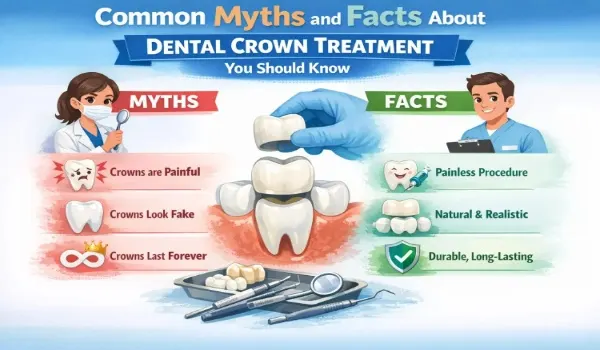
Dental crowns are one of the most commonly recommended restorative dental procedures, yet they are often misunderstood. Misinformation can create unnecessary fear or hesitation, preventing people from seeking timely care.
Understanding the truth behind dental crowns helps patients make informed decisions about their oral health. This article explores some of the most common myths and facts surrounding Dental Crown Treatment to clarify what it truly involves and why it is widely used in modern dentistry.
Myth 1: Dental Crown Treatment are only for cosmetic purposes
Fact: Dental crowns are primarily restorative, not just cosmetic.
While crowns can significantly improve the appearance of a tooth, their main purpose is to restore strength, function, and protection. Dentists often recommend crowns for teeth that are cracked, heavily filled, worn down, or weakened after a root canal. Cosmetic improvement is an added benefit, but function and durability are the core reasons for using crowns.
Myth 2: The procedure is extremely painful
Fact: Dental crown placement is generally comfortable.
Advances in dental technology and anesthesia have made crown procedures much more patient-friendly. Local anesthesia is used to numb the area, ensuring minimal discomfort during tooth preparation.
Most patients report only mild sensitivity after the procedure, which usually subsides within a few days. Dental Crown Treatment is considered a routine and low-risk procedure when performed by a qualified dentist.
Myth 3: Crowns damage natural teeth
Fact: Crowns are designed to protect natural teeth.
A crown acts like a protective cap placed over a damaged tooth, preventing further decay or structural breakdown. While some tooth shaping is required to fit the crown, this process strengthens the tooth rather than harming it. In many cases, crowns help preserve Teeth Whitening that might otherwise need extraction.
Myth 4: Dental crowns look unnatural
Fact: Modern crowns closely match natural teeth.
Older crown materials sometimes appeared bulky or metallic, but modern materials such as porcelain and zirconia are designed to blend seamlessly with natural teeth.
Dentists carefully match the color, shape, and size of the crown to surrounding teeth, resulting in a natural-looking smile that is difficult to distinguish from real teeth.
Myth 5: Dental crowns don’t last long
Fact: Crowns can last many years with proper care.
The lifespan of a crown depends on the material used, oral hygiene habits, and biting forces. On average, crowns can last 10 to 15 years or even longer with good care. Regular dental check-ups, brushing, flossing, and avoiding habits like teeth grinding significantly extend their longevity.
Myth 6: The procedure takes too many visits
Fact: Crown placement can be completed efficiently.
Traditional crowns usually require two visits—one for tooth preparation and impressions, and another for crown placement. However, with modern digital dentistry, same-day crowns are now possible in some clinics. These advancements make Dental Crown Treatment more convenient and time-efficient than many people expect.
Myth 7: Dental crowns are only for older adults
Fact: People of all ages may need crowns.
Crowns are recommended based on dental condition, not age. Younger patients may need crowns due to trauma, decay, or genetic enamel weaknesses. Early intervention with crowns can prevent further complications and maintain long-term oral health.
Conclusion
Understanding the facts behind common myths helps remove fear and confusion surrounding dental procedures. Dental crowns are not just cosmetic enhancements but essential restorations that protect and strengthen damaged teeth.
With modern materials, advanced techniques, and proper aftercare, Dental Crown Treatment offers a reliable and long-lasting solution for restoring oral function and appearance. By separating myths from facts, patients can approach dental care with confidence and make informed decisions that support long-term oral health.
FAQs
1. Is Dental Crown Treatment safe?
Yes, it is a safe and widely practiced dental procedure. When performed by a qualified professional using appropriate materials, the risks are minimal, and the benefits are long-lasting.
2. Can I eat normally after getting a crown?
Once the permanent crown is placed and adjusted, most patients can eat normally. Dentists may advise avoiding very hard or sticky foods initially to allow proper settling.
3. How do I care for my dental crown?
Care for a crown just like a natural tooth. Brush twice daily, floss regularly, and attend routine dental check-ups. Avoid habits like biting ice or grinding teeth, which can damage crowns over time.

Comments