 By
By 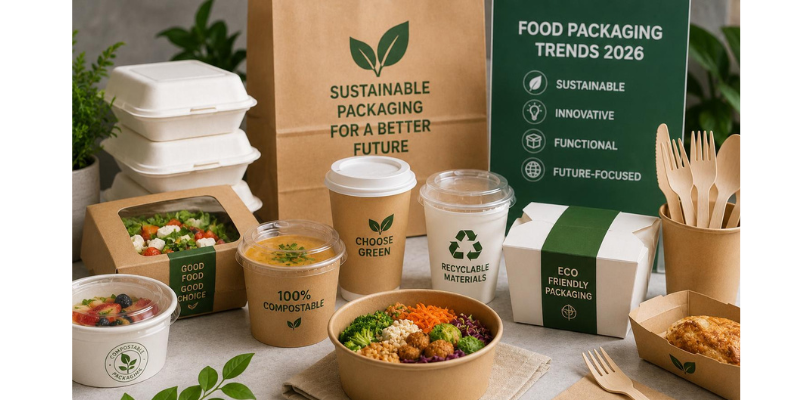
The food packaging industry has evolved in Canada, and now business adopts the latest trends to meet customer preferences. In 2026, food packaging is no longer only about protecting products but becomes a key factor in branding, sustainability, customer experience, and operational efficiency.
Now, the customers are looking for environmentally responsible packaging, and restaurants, food manufacturers, and grocery stores are looking for innovative solutions that balance sustainability and functionality. As a result, new packaging trends shape the Canadian food industry. In this blog, we tell you the top food packaging trends Canada 2026 for restaurants.
Food Packaging Trends in Canada
The top food packaging trends that shape the Canadian foodservice industry are
1. Non-Negotiable Sustainability
With the single-use plastic bans in Canada, restaurants are now moving to renewable resources. Compostable bagasse (from sugarcane) and recyclable paper are becoming standard options over traditional plastics.
2. Growth of Compostable Food Packaging
Compostable packaging is becoming popular among cafes, restaurants, and food delivery services. Its benefits include less environmental impact, reduced landfill waste, support for sustainability efforts, and compliance with changing environmental rules.
Many Canadian food businesses are replacing traditional plastics with compostable options made from renewable materials.
3. Minimalist Packaging Design
Another food packaging trend in Canada 2026 focuses on minimalist packaging design. Now the customers are looking for clean and simple packaging designs that promote authenticity and transparency. Its benefits include clear product information, less packaging material, and maintaining modern visual appeal. It reduces production costs and material waste and meets your business needs.
4. Tamper-Evident Delivery
To ensure food safety and build customer trust in third-party delivery apps, tamper-evident seals and tear-strip rigid containers are now widely used.
5. Increased Use of Recyclable Materials
The Canadian food business is now investing in recycled packaging. The common recyclable materials include paperboard, cardboard, aluminum pan, and certain recyclable plastics. Consumers prefer packaging that is easy to recycle and dispose of responsibly.
6. Consumer Engagement Through Connected Packaging
Another food packaging trend in Canada 2026 lies in connected packaging. It allows the brands to engage customers beyond the initial purchase. Packaging has now become a digital touchpoint instead of only a container. By adding smart features, you can communicate the product authenticity details, sustainability messages, and brand stories to customers.
This approach fits with the growing importance of transparency and consumer education in building brand loyalty.
7. Smart Packaging Innovation
Technology creates new sustainable ways in the food packaging industry. The smart solution includes the QR code links to recycling instructions, time temperature indicators for food safety, digital tracking for proper disposal, and Interactive consumer engagement
8. Eco-Friendly Branding Opportunities
Packaging has become the marketing tool for the food packaging supplies business, and shows their environmental responsibility. For this, businesses prefer to highlight the recyclable materials, sustainable sourcing, compostable certifications, and environmental commitments. It strengthens their brand identity and attracts customers.
9. Lightweight Packaging Solutions
The latest food packaging trends lie in lightweight solutions. Many food manufacturers focus on lighter packaging. It provides advantages like less transportation costs, less carbon emissions, material use, and improved operational efficiency. Lightweight packaging supports both environmental and business goals.
10. Transparency and Product Information
Now the customer wants clear and transparent details about products. So the packaging focuses on nutritional details, ingredient transparency, allergen labeling, and sustainability claims. Clear communication helps you build consumer confidence and trust.
11. Custom Packaging for Brand Recognition
Another trend lies in customized packaging. As the food business grows, they focus on custom packaging to earn brand recognition in competitive markets. It provides benefits to your business like strong brand identity, Improved customer recognition, Better unboxing experience, and Increased customer loyalty. Branded packaging can turn every order into a marketing opportunity.
12. PFAS-Free Food Packaging
Canadian businesses are becoming more aware of food contact coating and packaging materials. So, restaurants are opting for PFAS-free packaging to improve food safety, meet evolving regulations, support sustainability goals, and build customer trust. Many suppliers now clearly label PFAS-free Plastic Food Containers and paper products.
Conclusion
The latest food packaging trends Canada 2026 are shaped by sustainability, efficiency, regulation compliance, and changing consumer expectations. Food packaging design is not only about functionality, but it is strategic and forward-looking.
Brands are acting on trends by focusing on flexible formats, sustainable materials, and designs that build trust. Partnering with top flexible packaging manufacturers helps businesses match their packaging choices with long-term operational and environmental goals.
The future of food packaging relies on thoughtful, responsible design that balances performance, sustainability, and consumer trust, setting the stage for the next era of packaging excellence.
FAQs
1. What are the latest trends in food packaging?
Ans: The latest food packaging trends focus on convenience, sustainability, and innovation. The modern designs focus on eco-friendly materials, aesthetics, flexible formats, and improving food appeal. It also reduces costs and waste and meets consumer expectations.
2. What food packaging materials are trending?
Ans: The trending food packaging materials are kraft paper, molded Fiber, Monomaterial Plastic Films, and Bagasse. These supplies are used for takeout and delivery purposes.
3. What is the future of food packaging?
Ans: The future of food packaging is sustainable and focused on consumers. Food packaging trends now shift towards flexible, smart, and recyclable solutions and boost brand value.
4. How does food packaging affect sales?
Ans: Food Packaging often makes the final impression before a purchase decision. Research shows that packaging design influences up to 70% of in-store buying choices. In the Canadian market, clear bilingual presentation and clean design particularly enhance consumer trust.
5. Can branded food packaging help increase customer loyalty?
Ans: Yes, it creates a professional look, boosts brand recognition, encourages social media sharing, enhances customer experiences, and leaves a strong impression that fosters repeat business.






Comments