 By
By 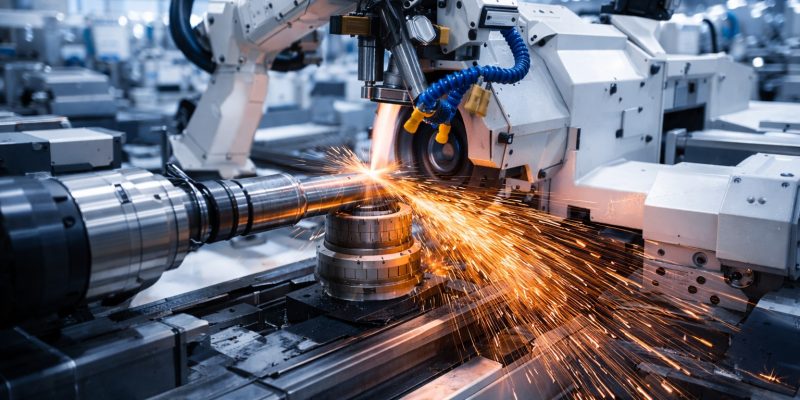
Introduction
The current manufacturing industry demands businesses to achieve three essential targets namely efficiency, precision, and speed. Automatic grinding machines serve as one of the technologies that transform production methods used by different industries. Businesses achieve better productivity results while decreasing operational mistakes and keeping uniform product standards through automation of their grinding processes. The article investigates the production benefits of automatic grinding machines.
What is an Automatic Grinding Machine?
An automatic grinding machine operates as a machine tool that uses automatic grinding processes to function without human operators. The automatic grinding machines perform fast precise work because they can repeat their tasks continuously, whereas manual grinders need human control to operate. The equipment finds extensive application within automotive, aerospace, and tool manufacturing and metal fabrication industries.
Key components of an automatic grinding machine include:
- Grinding wheel: The abrasive component that removes material from the workpiece.
- Workpiece holder: Secures the material during grinding.
- Control system: A programmable interface that manages the operation automatically.
- Feed mechanism: Moves the workpiece and grinding wheel with accuracy.
Types of Automatic Grinding Machines
There are several types of automatic grinding machines, each designed for specific applications:
1. Cylindrical Grinding Machines
The machines operate by grinding cylindrical workpieces from their outer surfaces. The machines are used in manufacturing processes that create shafts, rods, and bearings.
2. Surface Grinding Machines
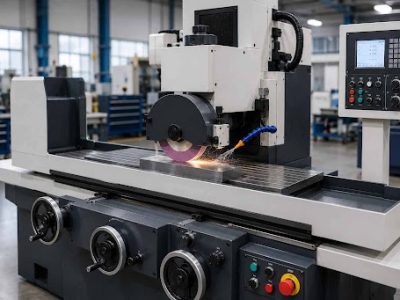
The equipment provides precise metal finishing capabilities because it operates on flat surfaces to finish metal plates, molds, and components.
3. Centerless Grinding Machines
The process enables factories to create uniform cylindrical parts through high-volume production without requiring workpiece centers for holding.
4. Profile and CNC Grinding Machines
The advanced machines use computer programming to achieve precise grinding results on intricate shapes through their grinding operations.
Advantages of Using Automatic Grinding Machines
Automatic grinding machines offer several benefits that directly impact production efficiency:
1. Increased Production Speed
Manual grinding requires excessive time for both complex shapes and large batch operations. Grinding operations achieve faster processing times because automatic grinding machines can operate continuously throughout their work cycles. The automated system enables precision shaft processing, which would require manual work for multiple hours to complete within just a few minutes.
2. Enhanced Precision and Consistency
Automatic grinders use programmed settings to ensure each piece is ground to the exact specifications. The system prevents inconsistencies that arise from human fatigue or human mistakes. The aerospace industry and medical equipment manufacturing require this durability because both fields depend on precise measurements.
3. Reduced Labor Costs
The automatic grinding machines need only basic monitoring which enables companies to decrease their staffing expenses and transfer workers to different duties. The production capacity of a facility expands because one operator can handle multiple machines at the same time.
4. Improved Safety
Grinding operations present deadly work conditions because flying debris and sparks combine with improper equipment handling to create safety hazards. Automatic grinding machine implementation reduces operator contact, which creates safer work environments and decreases accident occurrence.
5. Minimized Material Waste
Automatic grinders control cutting and grinding activities to extract only essential materials from the workpiece. The process creates efficiency because it decreases waste material and decreases expenses for manufacturing.
How Automatic Grinding Machines Enhance Production Workflow
Automatic grinding machines integrate seamlessly into modern production workflows, offering the following benefits:
1. Streamlined Operations
The machines execute repetitive grinding tasks through automated systems, which result in operators having more time to perform quality control work, maintenance tasks, and other activities that generate value.
2. High Batch Consistency
The automated grinding process produces uniform workpieces throughout a batch, which serves as a vital requirement for manufacturing operations that depend on interchangeable parts.
3. Integration with Other Manufacturing Processes
Automatic grinders function as connecting devices that link to production line equipment, including CNC lathes and milling machines. The system generates an uninterrupted operational process that achieves maximum efficiency through its elimination of downtime and its enhancement of production output.
4. Data-Driven Efficiency
Industrial equipment operates with a built-in capability to monitor operational metrics while it assesses equipment deterioration and it determines when maintenance must occur. The organization uses data-based methods to prevent unplanned equipment failures, which results in stable production output across their operations.
Real-World Applications
Automatic grinding machines are used across various industries, including:
- Automotive: Grinding engine components, transmission parts, and gears.
- Aerospace: Manufacturing precision turbine blades and structural components.
- Tool & Die Making: Producing cutting tools, molds, and dies with high accuracy.
- Metal Fabrication: Finishing metal parts for machinery and equipment.
Conclusion
Manufacturing facilities today require automatic grinding machines because they have become essential equipment. The machines create a competitive edge for businesses because they boost production rates while maintaining accuracy, decreasing workforce expenses, and enhancing operational security throughout various business sectors.
Automatic grinding machines serve as essential equipment for businesses in the automotive to aerospace, and general metal fabrication industries because they help organizations achieve higher operational efficiency and business expansion.
Comments